
Strengthening the Open Ecosystem: How Industry, Academia, and Open Communities Are Aligning Around the Future of Infrastructure
At a recent IOWN Global Forum Member Meeting, leaders from industry, academia, and open technology communities came together around a shared realization: the challenges facing next-generation infrastructure, particularly as AI accelerates, cannot be solved in isolation.
From optical transport and data center scalability to interoperability, sustainability, and workforce development, the discussion underscored a growing opportunity for collaboration across organizations that have historically operated in parallel. The session brought together perspectives from the IOWN Global Forum, OpenROADM, the Open Compute Project, as well as an academic view from the University of Texas at Dallas, highlighting how aligned priorities are beginning to converge.
A Shared Reality: Infrastructure Is Under Pressure
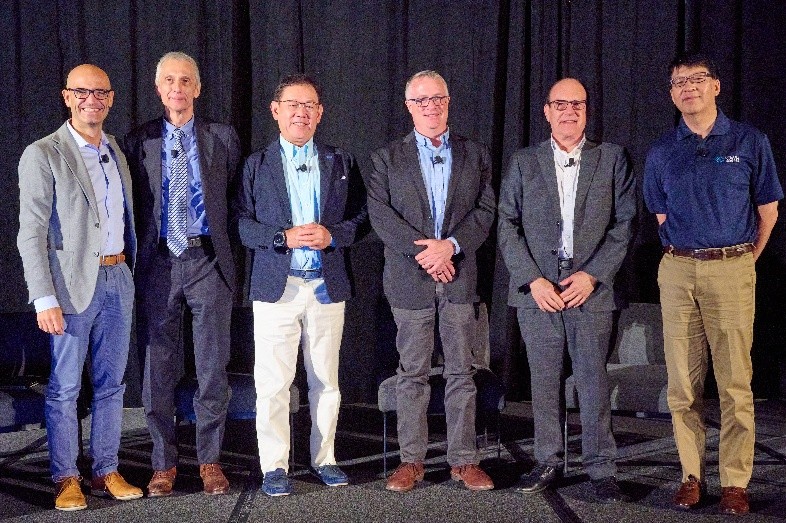
The discussion opened with a grounding reality from network operators. John Gibbons, Assistant Vice President at AT&T Labs, described the unprecedented pace of traffic growth driven by AI, cloud, and data-intensive applications. Even before the AI surge, backbone traffic was growing at roughly 20% year over year, an extraordinary challenge at scale.
Meeting this demand is not simply a matter of adding bandwidth. Power efficiency, cooling constraints, acoustic limitations in network facilities, and the unknown shape of future AI applications all complicate network planning. As data centers become more geographically distributed, often driven by power availability rather than proximity to users, optical transport networks are increasingly critical to maintaining performance and resilience.
This challenge resonates directly with the mission of the IOWN Global Forum: enabling infrastructure that delivers step-change improvements in performance, efficiency, and sustainability, not incremental gains.
The Risk of Optical Silos—and the Need for Interoperability
From the perspective of infrastructure architecture, Masahisa Kawashima of NTT and Chair of the IOWN Global Forum Technology Working Group highlighted a growing concern: the rise of private fiber networks operated independently by hyperscalers, colocation providers, and cloud operators.
Without optical-layer interoperability, these private deployments risk creating optical silos – fragmented networks that undermine efficiency and complicate large-scale computing. While packet networks have long benefited from open interconnection models, optical transport remains far more constrained.
This is where alignment between organizations such as OpenROADM, OCP, and the IOWN Global Forum becomes critical. Each brings complementary strengths: hardware interoperability, open architectures, and end-to-end infrastructure vision. Together, they point toward an “internet of fiber networks” that mirrors the openness and scalability of today’s packet-based internet.
Academia’s Role: Research, Integration, and the Next Workforce
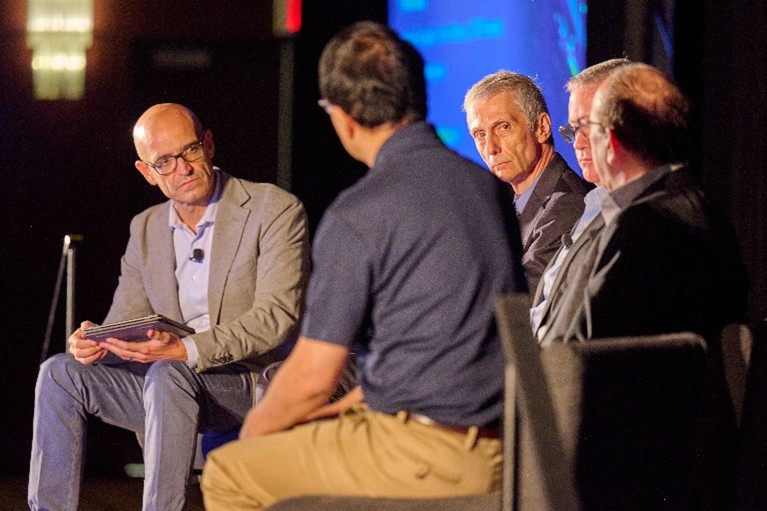
The role of universities emerged as more than academic research alone. Andrea Fumagalli, Professor at the University of Texas at Dallas, shared how university-led open labs enable multi-vendor experimentation that is difficult to achieve in production networks.
These environments allow researchers and students to work directly with open software, open hardware, and real-world constraints, accelerating innovation while training the next generation of engineers. Open-source platforms were highlighted as transformative: they allow students to explore, modify, and extend systems in ways proprietary platforms cannot.
For the broader ecosystem, this matters. As infrastructure becomes more software-defined, open, and automated, access to skilled engineers who understand these systems end-to-end becomes a strategic advantage. Collaboration with academia is no longer optional, it is foundational.
Open Hardware, Open Software, and Moving Beyond Specifications
From the open hardware perspective, Cliff Grossner, Chief Innovation Officer at the Open Compute Project, emphasized that progress depends on moving beyond specifications alone.
OCP’s model of defining base specifications, enabling multiple vendor implementations, and delivering deployable products has transformed data center hardware. That same model, he argued, has yet to fully reach long-haul optical networks and radio access infrastructure.
The opportunity is clear: applying open, multi-vendor architectures to optical transport and radio units could unlock faster innovation, stronger competition, and easier integration with AI-driven automation. Importantly, this approach aligns closely with how the IOWN Global Forum works, bridging research, proof-of-concept, and real-world deployment.
AI, Sustainability, and the Economics of Change
AI infrastructure was a recurring theme throughout the discussion. While much attention today focuses on training large models, panelists pointed to inference – distributed, latency-sensitive, and power-constrained – as the next major challenge.
This has implications across the stack: from optical circuit switching and package optics to new computing architectures and application models designed for distributed environments. Sustainability is inseparable from this conversation. As data center power density increases dramatically, transparency around energy use and carbon impact becomes essential.
Here again, collaboration matters. Efforts within OCP to standardize carbon disclosure, alongside IOWN Global Forum initiatives focused on sustainability and techno-economic analysis, reflect a shared understanding: infrastructure must be both technically viable and economically credible to scale.
A Clear Takeaway: Alignment Creates Momentum
What emerged most clearly from the session was not a single solution, but a shared direction. The challenges of AI-driven infrastructure—scale, efficiency, interoperability, sustainability—cut across organizational boundaries. No single group can solve them alone.
By strengthening collaboration between industry operators, open communities, and academia, organizations like the IOWN Global Forum, Open ROADM, and the Open Compute Project can accelerate progress, turning research into deployment, openness into interoperability, and innovation into real economic value.
As infrastructure enters its next phase, the opportunity is not just to build faster networks, but to build them together.
