
As broadcast workflows evolve, live broadcast production is increasingly distributed across venues, control rooms, and remote operations, but success depends on networks that are fast, predictable, and reliable enough for live workflows.
To better understand how these requirements could be met, the IOWN Global Forum conducted a Proof of Concept (PoC) experiment focused on photonics-based networking for remote live media production in the broadcast industry. Specifically, the PoC examined whether remote media production could be implemented economically at scale, using dynamic network switching to support live broadcast performance without dedicated, fixed infrastructure.
Why Remote Media Production is Challenging
In practice, live production workflows are highly sensitive to delay and interruptions, particularly for camera control, switching, monitoring, and synchronization. Traditional network approaches can limit how far production systems can be distributed without affecting operator experience or broadcast quality.
Beyond technical constraints, from an operational perspective, conventional on-site production relies on scarce, high-cost resources such as outside broadcast (OB) vans used for live production and specialized crews, which can limit scalability and flexibility. As a result, even when technical requirements such as latency can be met, traditional approaches often rely on dedicated connections and fixed infrastructure, creating cost and scaling challenges as the number of venues and events grows.
What this PoC explored
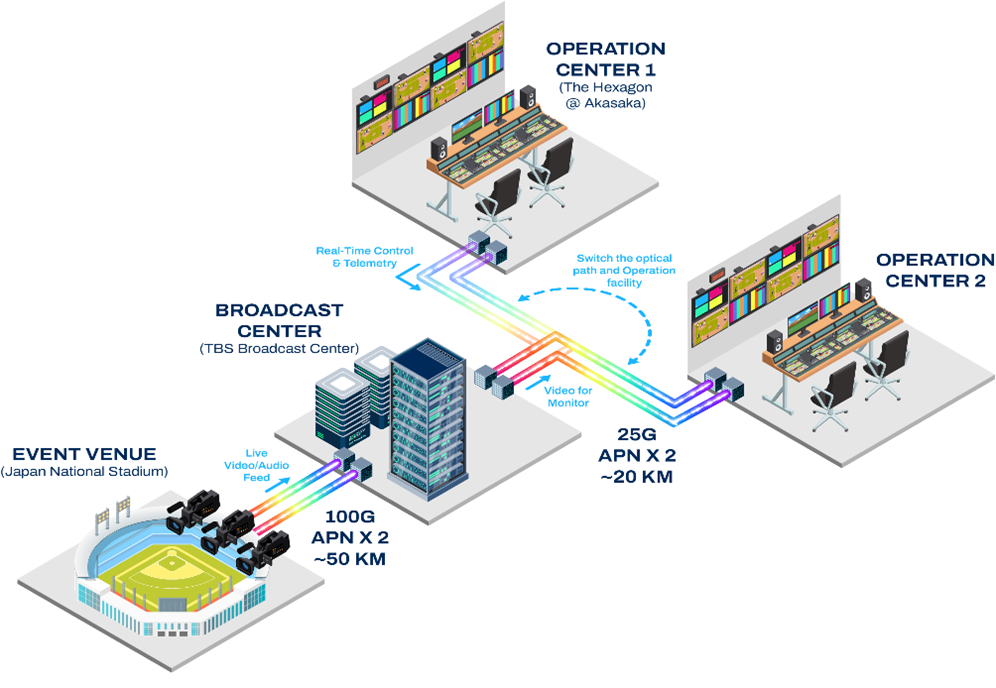
Figure 1. Remote media production architecture used in the PoC.
The configuration connects an event venue, a broadcast center, and remote operation centers over an All-Photonics Network (APN).
To address these challenges, the experiment involved a distributed live production environment connecting an event venue, a broadcast center, and remote operation center(s), where production teams control and monitor live broadcasts via an All-Photonics Network (APN).
Professional broadcast equipment was separated across sites to reflect real-world remote production workflows. Tests explored whether this architecture could meet live broadcast requirements for performance, reliability, and operational continuity. In effect, the scenario aimed to keep live broadcasts running smoothly, even when the production teams were located elsewhere.
Results
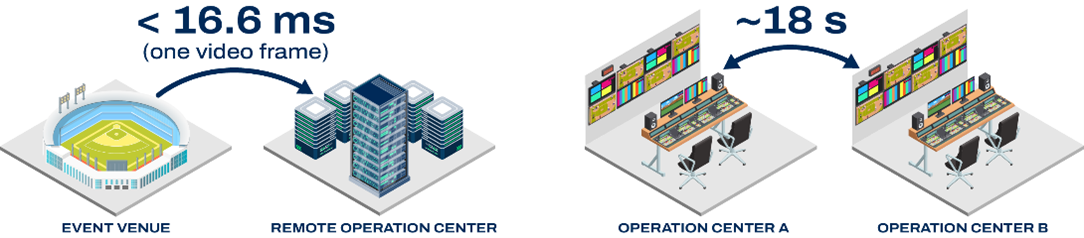
Figure 2. Performance benchmarks and switching behavior were validated in the PoC.
Left: Live video transmission between the event venue and remote operation center met the PoC latency requirement of less than 16.6 milliseconds, equivalent to one video frame. Right: When production control switched between remote operation centers, live video and audio streams were reconnected in approximately 18 seconds after network resources were reassigned.
During testing, the PoC met established benchmarks for performance and reliability. Network delay satisfied the PoC requirement of less than 16.6 milliseconds, equivalent to one video frame, confirming that live broadcast performance can be maintained within a dynamically switched network environment. In addition to baseline performance, during failure testing, redundant network paths supported continued operation, with no visible video disturbance, no audio jitter or spikes, and normal operation of control panels when one network path was taken out of service.
Beyond resilience, the results also highlight the APN’s ability to enable operational flexibility.The PoC demonstrated switching connectivity between remote operation centers, where production teams control and monitor live broadcasts, supporting shared use of production resources, such as production switchers. The switching capability allows network resources to be shared and reassigned as needed, rather than permanently dedicated to a single venue or production.
Specifically, when production control switched from one operation center to another, live video and audio streams were reconnected in approximately 18 seconds in this PoC configuration. Following reconnection, the system was ready for operators to resume full live production within a few minutes, depending on how quickly production equipment completed its startup and synchronization steps.
Why This Matters for Broadcasters
Taken together, dynamic network switching provides an economically scalable approach to remote production.The PoC shows thatAPN’s switching capability allows network connectivity to be established and reassigned as needed, rather than permanently dedicated to a single venue or production. This makes it possible to support remote media production without incurring the high costs associated with fixed, always-on connections at every site, especially as broadcasters support more live events across more locations.
From a business standpoint, this new approach allows broadcasters to move beyond capital expenditure (CAPEX)-bound production models. Traditional live production relies heavily on fixed, inflexible resources. For example, it requires large upfront investments in OB vans that must be purchased, operated, and maintained regardless of how frequently they are used. In addition, live events typically require sizable on-site crews with highly specialized skills. These personnel resources cannot be easily scaled up or down based on the number of concurrent events, making it difficult to optimize staffing levels and control operational costs.
Remote media production helps broadcasters reduce their dependence on fixed and inflexible resources. However, high-QoS (Quality of Service) network connections have traditionally resulted in high, largely fixed costs, undermining the cost elasticity that remote media production is meant to deliver. This is where the APN plays a critical role. By enabling dynamic, on-demand provisioning of high-capacity optical connections, APN allows network resources to scale in line with actual production requirements. In doing so, it becomes the final piece of the puzzle—realizing a truly flexible, scalable, and economically sustainable remote production model.
Conclusion
Overall, the PoC shows that APN’s switching capability enables the deployment of remote live production that is both operationally viable and economically justifiable at scale. It also points toward production models that scale more effectively as event volume and distribution needs grow.
Interested in more technical details? Read the full PoC report for system architecture, measurements, and cost analysis.